The Ultimate Guide to Sun Protection: Why and How to Apply Sunscreen for Glowing Skin
-
admin
- Posted on
With the Indian summer fast approaching, the heat isn’t the only thing rising—the UV index is too. At Andosa Lab, we believe that healthy skin starts with protection. Whether you are heading to the beach or just sitting by your window, understanding the importance of sunscreen is the first step toward a lifetime of radiant skin.
Why Your Skin Needs a Shield
Many people ask, “Does sunscreen really work?” The answer is a resounding yes. Sunscreen effectiveness is backed by years of dermatological research. It isn’t just a cosmetic choice; it’s a health necessity. Understanding why we use sunscreen starts with understanding the sun itself.
The sun emits uv rays sunscreen is designed to block or absorb them. Without this barrier, these rays penetrate deep into the dermis. This is why sunscreen is important: it acts as your personal bodyguard against premature aging, dark spots, and more serious skin conditions.
The Benefits of Daily Wear
There are numerous sunscreen benefits for skin, ranging from preventing sunburns to maintaining an even skin tone. When we talk specifically about the sunscreen benefits for the face, we are looking at preventing fine lines and “photo-aging.” Using a product from Andosa Lab ensures that you get these sunscreen benefits for your face every single day.
Use of Sunscreen on Face
Knowing you need it is one thing, but knowing how to apply sunscreen correctly is what actually saves your skin. Many users wonder, “Can we use sunscreen directly on the face?” Yes, you can, provided your skin is cleansed.
Step-by-Step: The Correct Way to Apply Sunscreen
If you want to maximize sunscreen effectiveness, follow these steps to apply sunscreen:
- Cleanse: Start with a fresh palette.
- Measure: Use the two-finger rule (two strips of product on your index and middle fingers).
- Dot: Place dots across your forehead, cheeks, nose, and chin.
- Blend: This is the correct way to apply sunscreen—gently massage it in until no white cast remains.
When considering where to apply sunscreen, don’t stop at your cheeks! Your ears, neck, and the back of your hands are equally vulnerable. Understanding where to apply sunscreen ensures you don’t have “mismatched” aging patterns later in life.
Deciphering the Labels: SPF 50 and Beyond
You’ve likely seen sunblock sunscreen spf 50 on many bottles. But SPF 50 sunscreen means more than just a high number. Specifically, spf 50 sunscreen means it blocks about 98% of UVB rays.
When choosing a product, look for a broad-spectrum sunscreen. A broad-spectrum sunscreen protects you from both UVA (aging) and UVB (burning) rays. At Andosa Lab, our medicated sunscreen options are formulated to provide this high level of safety.
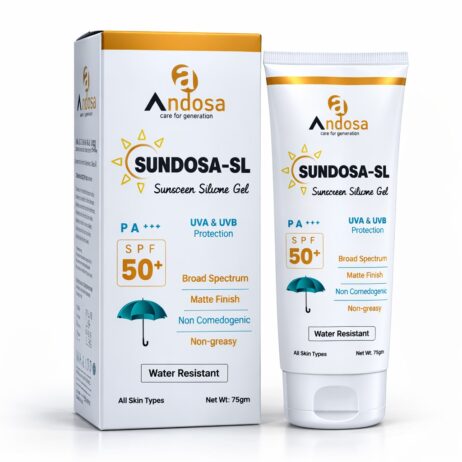
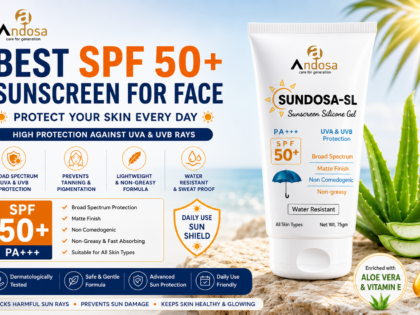
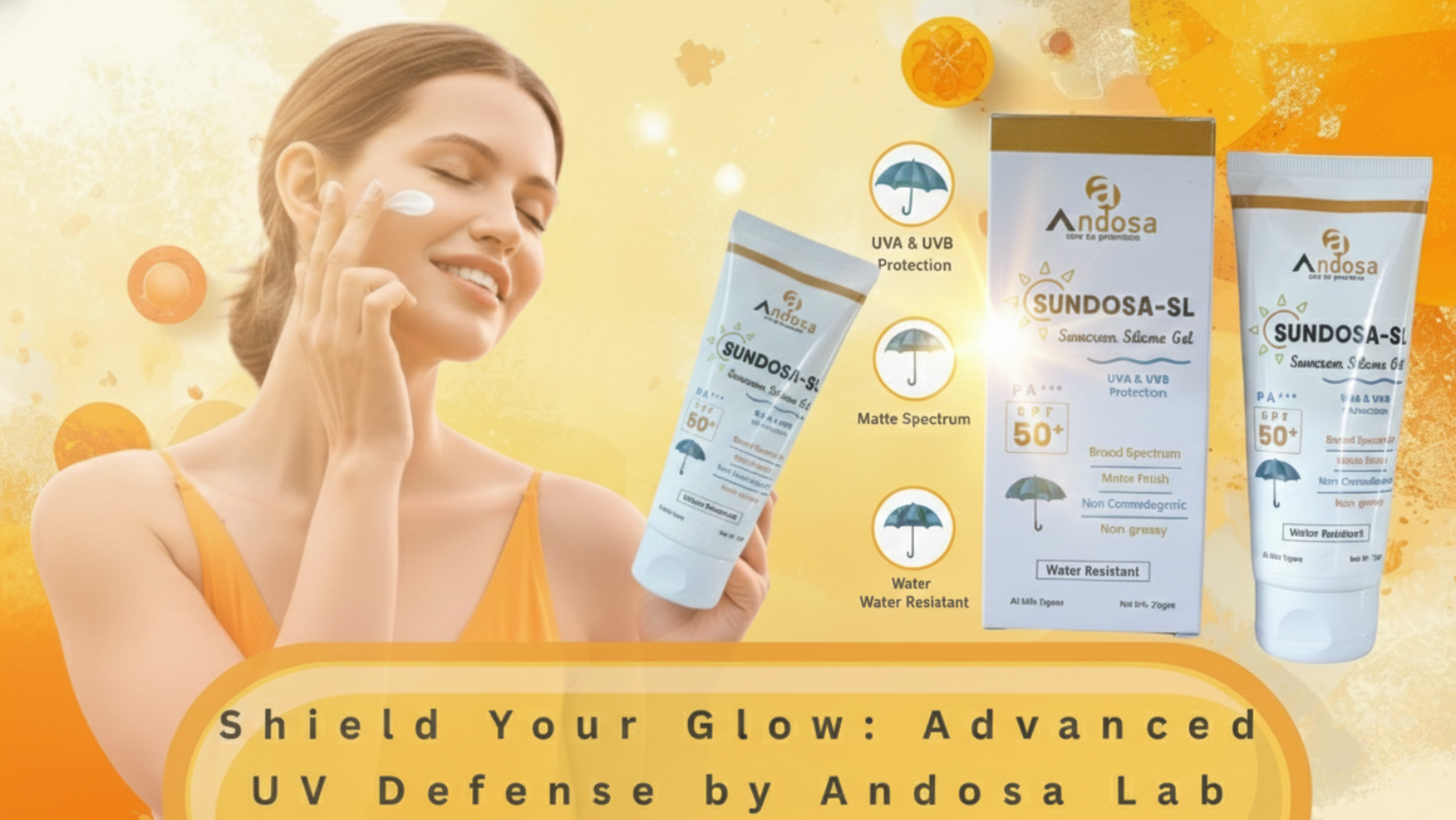
Sundosa 50SPF Sunscreen Gel
₹609.00
Sundosa 50 SPF Sunscreen Lotion is used as next generation sunscreen lotion to prevent damage to skin from harmful UVA and UVB rays of sunlight. It is a broad-spectrum sunscreen that protects the skin against UVA and UVB rays by providing physical and chemical barriers to sunlight.
Add to cart
Buy Now
What is Broad Spectrum Sunscreen?
If you’ve ever wondered what broad-spectrum sunscreen is, it simply means the formula has passed testing to prove it protects against the full range of ultraviolet light. This sunscreen uv protection is vital in the harsh Indian climate.
Frequently Asked Questions
- Should I use sunscreen at home?
Absolutely. UV rays can pass through glass windows. Yes, especially if you spend time near windows or screens. - What is the minimum sunscreen spf?
Most dermatologists suggest a minimum sunscreen spf of 30 for daily use, but for Indian summers, spf 50 sunscreen benefits are much better. - When to use sunscreen on the face?
You should apply it every single morning as the final step of your skincare routine.
Sunscreen Ingredients and Scientific Protection
When you visit Andosa Lab, you’ll notice that we prioritize transparency. To truly understand how to use sunscreen, you must first understand what is inside the bottle. Sunscreen ingredients generally fall into two categories: physical (like Zinc Oxide) and chemical (like Avobenzone).
The sunscreen lotion ingredients we choose determine how the product feels on your skin. For example, a medicated sunscreen often contains soothing agents like Allantoin alongside its protective filters. By looking at the sunscreen lotion ingredients, you can tell if a product will be greasy or matte.
Understanding Sunscreen Classification
In the world of dermatology, sunscreen classification is usually divided into “Physical,” “Chemical,” and “Hybrid.”
- Physical: Sits on top of the skin and reflects light.
- Chemical: Absorbs UV rays and converts them into heat.
- Hybrid: Uses a mix of both for maximum sunscreen uv protection.
This sunscreen classification is important because it helps you choose the right product for your skin type. If you have sensitive skin, a medical sunscreen or a physical blocker is often the best use of sunscreen on the face to avoid irritation.
When and Where: Perfecting Your Routine
A common question we receive is, “When to apply sunscreen?” The answer is: 20 minutes before you step out. This timing allows the sunscreen ingredients to settle and form a protective film. If you are wondering when sunscreen should be applied during your skincare routine, it should always be the last step before makeup.
The Importance of Consistency
The importance of sunscreen cannot be overstated when it’s 40°C outside. Even if you are indoors, you should ask yourself, “Should I use sunscreen at home?” If your room has natural light, the answer is yes. Sunscreen uv protection is necessary indoors because UVA rays penetrate glass.
Here is a quick guide on where to apply sunscreen:
- The entire face (avoiding the eyes).
- The neck and “V” of the chest.
- The tops of the ears.
- The back of the hands.
Knowing where to apply sunscreen ensures that protecting your skin isn’t just a phrase, but a reality for your whole body.
Is it working? Effectiveness and SPF
Many skeptics ask, “Does sunscreen really work?” The science is clear: it does. However, sunscreen effectiveness depends entirely on the amount you use. If you use too little, you won’t get the spf 50 sunscreen benefits listed on the label.
SPF 50 sunscreen means that it would take 50 times longer for your skin to burn than if you weren’t wearing any protection at all. This high minimum sunscreen spf is recommended for the Indian climate. When you understand what spf 50 sunscreen means, you realize why it’s a summer essential.
Why Choose Medical Grade?
A medical sunscreen is often formulated without heavy fragrances or pore-clogging oils. This type of medicated sunscreen is ideal for those dealing with acne or melasma. Using a medical sunscreen ensures that you are treating your skin with the same care a doctor would recommend.
Checklist: Steps to Apply Sunscreen Correctly
To get the most out of your product, follow these steps to apply sunscreen:
- Apply to dry skin.
- Use the “Two-Finger Rule.”
- Reapply every 2-3 hours if outdoors.
By following these steps to apply sunscreen, you ensure that the product protects your skin from the harsh uv rays that sunscreen is meant to fight.
Broad Spectrum Protection: Beyond the Surface
When people browse for products, they often ask, “What is broad-spectrum sunscreen?” In simple terms, it is your skin’s total defense system. While SPF mainly measures protection against sunburns (UVB), a broad-spectrum sunscreen also shields you from UVA rays, which cause long-term skin damage and aging. Understanding what is broad spectrum sunscreen is is the difference between just avoiding a burn and actually preserving your youth.
For the best results, you need a product that balances sunscreen effectiveness with comfort. This is why sunscreen classification is so useful; it helps you identify which formulas are broad-spectrum and which are only basic blockers.
Does Sunscreen Really Work in High Heat?
You might wonder, “Does sunscreen really work?” when you are sweating under the Indian sun. Yes, it does, but you have to know how to use sunscreen properly in humidity. Water-resistant formulas are key. If you are questioning why we use sunscreen even when it’s cloudy, remember that uv rays can penetrate through clouds and mist with ease.
The Daily Habit: Use of Sunscreen on Face
Your face is the most exposed part of your body. Therefore, the use of sunscreen on the face should be non-negotiable. Many people are hesitant, asking, “Can we use sunscreen directly on the face?” If you are using a high-quality product from Andosa Lab, you can and should. In fact, the correct way to apply sunscreen is to put it directly on your skin after your moisturizer has dried.
When to Use Sunscreen on Face
The question of when to use sunscreen on the face is simple: every single day. Whether it is a workday or a holiday, when to use sunscreen on the face remains the same—at least 15 to 20 minutes before sunlight hits your skin.
If you are still asking why sunscreen is important, look at the statistics regarding skin health. Sunscreen uv protection significantly lowers the risk of developing sun-induced spots. This is why we use sunscreen; it is an investment in your future self.
Comparing Options: SPF 50 vs. Lower SPF
In the Indian market, the minimum sunscreen spf recommended by experts is usually SPF 30, but SPF 50 is the gold standard for summer. SPF 50 sunscreen benefits include a higher margin of safety for those who might not apply enough product. While SPF 30 is good, the SPF 50 sunscreen benefits offer that extra layer of security during peak hours (10 AM to 4 PM).
Sunscreen Lotion Ingredients to Look For
When reading the back of a bottle, look for sunscreen lotion ingredients like Zinc Oxide or Titanium Dioxide for physical blocking, or Oxybenzone-free chemical filters. The sunscreen ingredients determine how the product interacts with your sweat and oil. For those with sensitive skin, a medicated sunscreen is often the safest choice to avoid breakouts while ensuring the product protects your skin.
When and How: The Golden Rules
Let’s recap how to apply sunscreen for maximum coverage.
- When to apply sunscreen: First thing in the morning.
- How to apply sunscreen on face: Use the dot method and blend outward.
- How to apply sunscreen: Use a generous amount—about a nickel-sized dollop for the face alone.
If you are at work and wondering when sunscreen should be applied for a second time, the rule of thumb is every two hours if you are near a window or outdoors. This consistency is the only way to ensure the product truly protects your skin throughout the day.
Summary of Benefits
The sunscreen benefits for skin go beyond just vanity. By maintaining sunscreen uv protection, you are preventing cellular damage. The sunscreen benefits for the face are particularly noticeable as you age, as you will have fewer wrinkles compared to those who skipped this step. This is why sunscreen is important—it is the ultimate anti-aging secret.