
Stretch Marks and Burn Marks: How to Actually Fade Daag (2026 Guide)
-
admin
- Posted on
Talk to any new mom and you’ll hear the same thing. “It’s fine, I don’t mind the marks.” Then two minutes later — “but if something actually worked, I’d try it.” That’s basically everyone.
Same with burn marks. A hot oil splash in the kitchen, an old scar from childhood, a mark from an iron. People just live with these daag for years thinking nothing short of a doctor can fix them. Not true anymore.
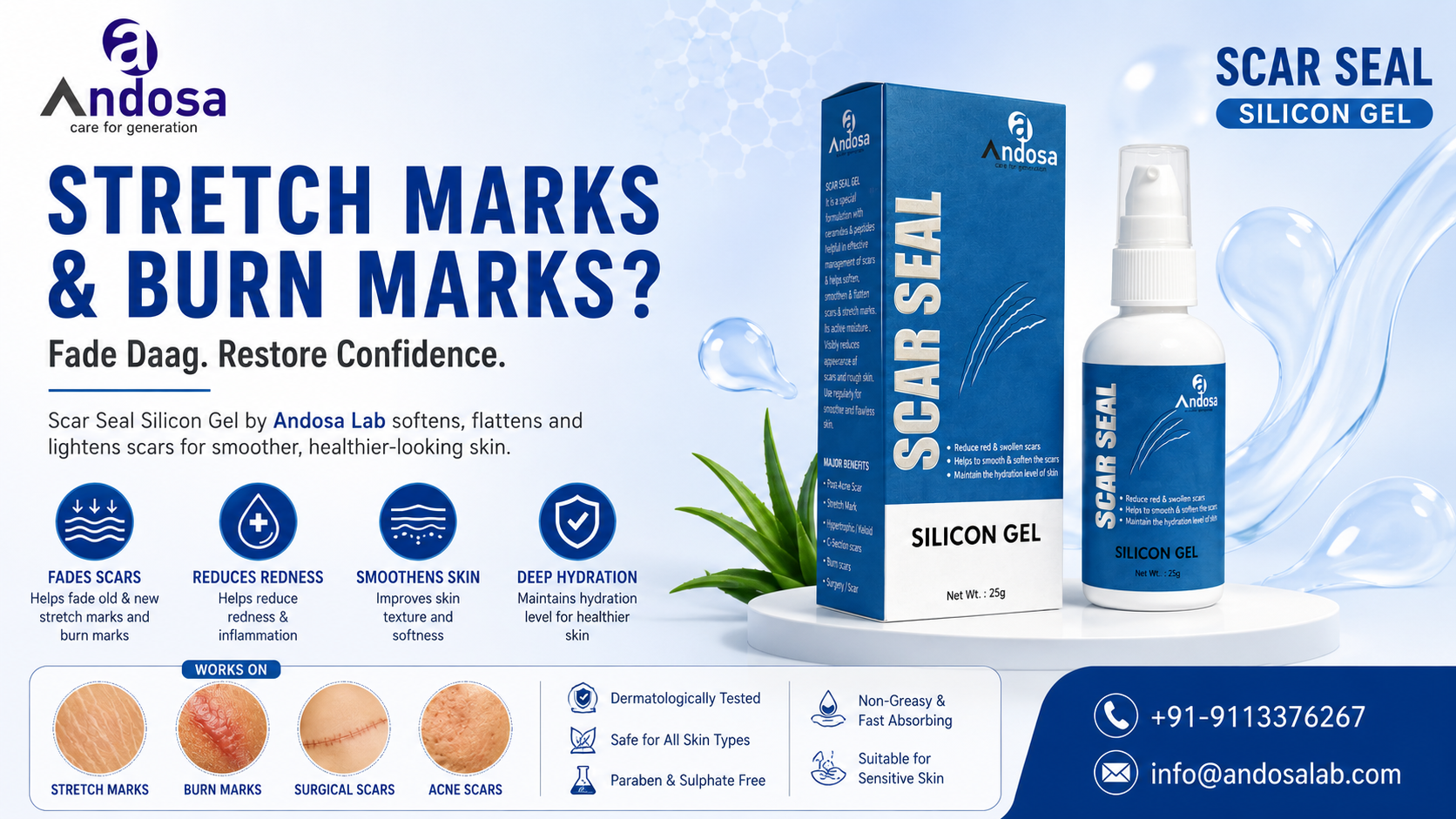
This isn’t a general “all scars” post. It’s just about two things — pregnancy stretch marks and burn marks — how they happen, what actually helps, and where Scar Seal Silicon Gel by Andosa Lab fits in.
Stretch Marks Removal Cream for Pregnancy: What’s Really Going On
Here’s the simple version. When your belly grows fast during pregnancy, your skin stretches faster than it can keep up. The middle layer tears a little, and that tear heals into a stretch mark. Pink or purple at first, then silvery over time.
No cream stops this completely — genetics and how fast you gain weight matter more than any product ever will. But a good stretch marks removal cream for pregnancy can still soften the texture and calm the color so marks blend in better.
The one ingredient that actually has real backing, not just pretty packaging, is silicone. It sits on your skin like a thin, breathable layer, keeps moisture in, and quietly tells your skin to stop making so much extra collagen in that spot. Doctors use this same idea for surgery scars, and it works the same way on stretch marks.
Scar Seal from Andosa Lab uses silicone gel as its base, plus peptides for healthy collagen, ceramides to lock in moisture, and aloe vera to keep it soothing on skin that’s still healing. It’s light. Not one of those heavy creams sitting on your belly all day — it dries and disappears.
Timing matters too. Starting in the third trimester or right after delivery works better than waiting a year and hoping an old mark responds the same way. Fresh marks, the pink ones, fade faster because your skin is still actively working on them.
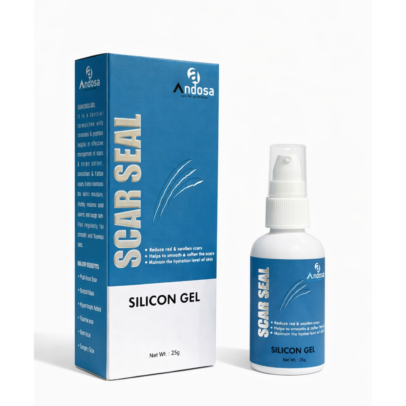


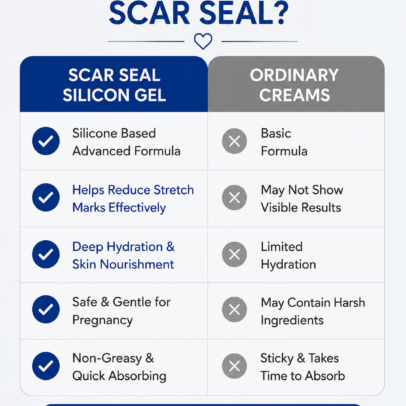
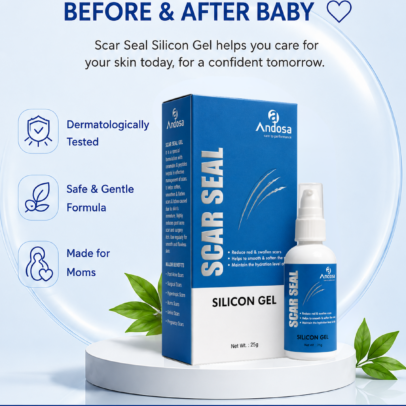
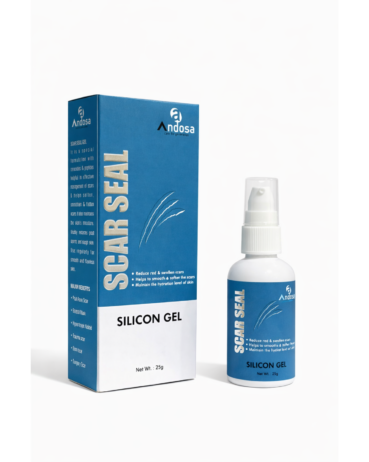
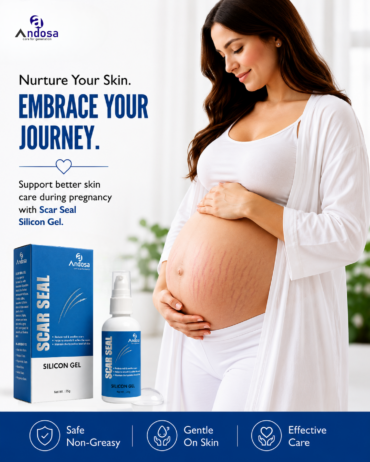
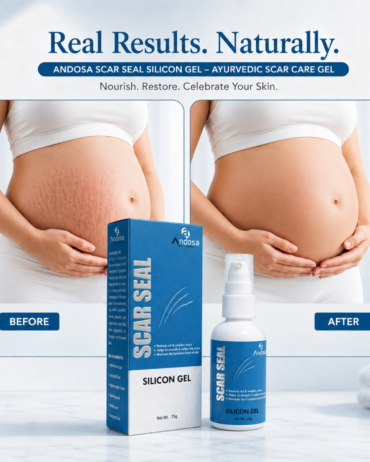
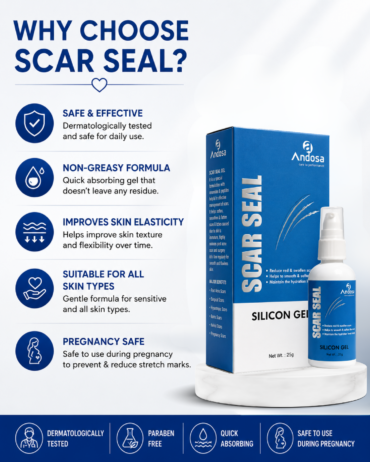
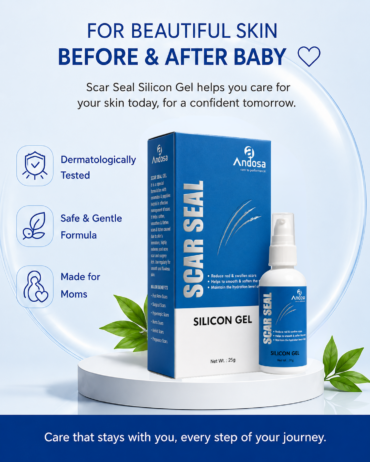
Scar Seal Silicon Gel
₹699.00
Scar Seal Gel contains topical self-drying silicone gel which is relatively recent treatment modality promoted as an alternative to topical silicone gel sheeting. Patients with scars of different types including superficial scars, hypertrophic scars, and keloids were treated with silicone gel application.
Add to cart
Buy Now
Best Cream for Pregnancy Stretch Marks: How to Pick One That Works
Type “best cream for pregnancy stretch marks” and a hundred products pop up saying the exact same thing. Here’s how to actually tell them apart.
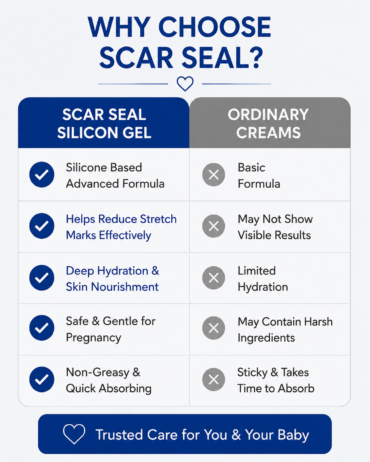
Check the main ingredient, not the marketing. Cocoa butter, shea butter, vitamin E oil — they feel nice, they moisturize well, but they don’t have strong proof behind them for actually fading marks once they’ve formed. Fine for comfort. Not the thing doing the real work.
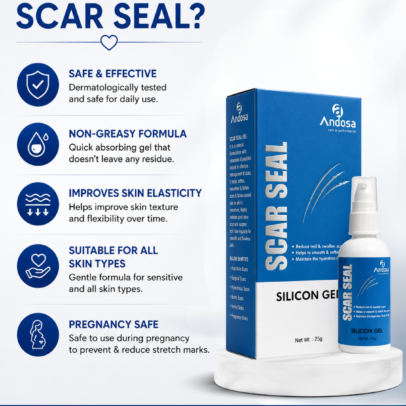
Check if it’s safe during pregnancy and breastfeeding, because a lot of scar creams aren’t. Silicone gel is one of the few things dermatologists consider safe here, which is why it’s become the go-to recommendation for new moms.
Check how it feels too. Pregnancy skin gets more sensitive. Something fragrance-free that dries fast and doesn’t feel sticky matters more than people think — you’re using this twice a day for weeks, and if it feels bad, you’ll just stop by week three.
Scar Seal ticks these boxes because silicone is the actual star ingredient here, not something buried at the bottom of a long list. The peptides and ceramides add real support without making the gel heavy or uncomfortable.
How to Remove Stretch Marks After Pregnancy: A Realistic Timeline
If you’re searching how to remove stretch marks after pregnancy, let’s be honest first. “Remove” isn’t quite right — fade and blend is the real goal, and that’s still a win worth having.
Here’s what to actually expect:
Week 1-2: Nothing to see yet. The gel’s working underneath, but the surface looks the same.
Week 3-4: Texture changes first, before color. Marks feel a bit smoother.
Week 6-8: Color starts to shift. That reddish-purple calms toward pink, then closer to your normal skin tone.
Week 10-12: Real, visible fading if you’ve stuck with it twice a day.
Month 4-6: Full results, especially on marks that were still fresh when you started.
Consistency beats everything else here. A cheaper gel used every single day beats an expensive one used once a week. Set a phone reminder if you need to. Or just tie it to something you already do, like your evening shower.
Silicone Gel for Burn Marks: Why Burns Need Different Treatment
Burn marks don’t behave like a cut or a surgery scar, so treating them the same way just doesn’t work as well. Silicone gel for burn marks needs to account for a few burn-specific things.
Burns go deeper into the skin, so the scar that forms tends to be thicker and more raised than a clean cut. Your skin overdoes it while healing, laying down way more collagen than needed.
Silicone gel is one of the best-studied topical options for exactly this problem, because hydration plus gentle collagen control directly fights that overcorrection. It also protects healing skin from rubbing and germs, which matters more for burns since that skin tends to stay sensitive for a while.
The aloe vera in Scar Seal is worth a mention here specifically — aloe has genuinely been used for burns forever, it’s not just a nice-smell filler in this formula. It’s doing real soothing work.
One honest flag: deep or serious burns need a doctor first, always. Scar Seal and gels like it are for the fading stage after a wound has closed fully, not for open or still-healing burns.
Postpartum Stretch Marks Treatment: What New Moms Actually Need
Postpartum stretch marks treatment is a bit different from general stretch mark care because your body’s still recovering, hormones are still settling, and if you’re breastfeeding, you’re rightly more careful about what touches your skin.
Good news — silicone gel is widely seen as fine with breastfeeding since it doesn’t get absorbed into the body the way some active ingredients do. Still, mention it to your doctor if you’re unsure, especially near the chest.
Postpartum skin also gets more reactive for the first few months while hormones settle down. A heavily fragranced product can irritate skin that wouldn’t have reacted before pregnancy at all. That’s part of why Scar Seal’s lighter, aloe-and-ceramide formula tends to sit better than those heavy scented body butters everyone markets for this.
Realistically, no new mom has time for a five-step routine. Two minutes, twice a day, fit into something you’re already doing — shower or bedtime — is what actually sticks. That matters more for real results than any single fancy ingredient.
Old Stretch Marks Removal: Being Honest About What’s Possible
Old stretch marks removal — marks from five, ten, even fifteen years back — is genuinely harder than fresh ones, and it’s better to be upfront about that instead of overpromising.
Older silvery-white marks have already settled. Less blood flow to that area, which is part of why they look paler than fresh ones. Silicone gel can still help with texture and some blending, but you won’t see the dramatic fading you’d get on a fresh mark.
That doesn’t mean it’s pointless to try. A lot of people using Scar Seal on older marks still notice the texture softening even when the color barely shifts. Pair it with gentle exfoliation, not scrubbing, and daily sun protection, and you can see real improvement over three to six months.
If an old mark really bothers you and the gel plateaus, that’s when a chat with a dermatologist about laser or microneedling makes sense — but for most people, that’s more than the situation actually needs.
Fresh Burn Scar Treatment: Why Starting Early Matters So Much
Timing is everything with fresh burn scar treatment. The window right after a wound closes, usually five to ten days after the injury, is when silicone treatment makes the biggest difference to how the final scar looks.
Starting early basically gets ahead of the overcorrection before it happens. Your skin’s still deciding how much collagen to lay down in those first weeks, and a silicone layer during that window nudges things toward flatter and softer instead of thick and raised.
Go gentle. Burn-healed skin stays tender for weeks after it closes, so this isn’t a rub-it-in-hard situation. A thin layer, worked in softly for two to three minutes, twice a day, is right. Scar Seal’s fast-dry formula helps here too, since burn scars often sit on hands and arms that need to stay usable all day.
Missed the early window? Doesn’t mean it’s too late. Silicone gel still helps burn scars that are months or years old. It’s just less work if you start early.
C-Section Scar and Stretch Marks: One Routine, Both Marks
A lot of new moms deal with two things at once — a C-section scar and stretch marks, often right next to each other on the lower belly. Good news — you don’t need two different products for this.
C-section scars are surgical cuts, so they’re usually clean and thin — one of the scar types silicone gel handles best since there’s less damage to fix compared to a burn or a rough injury. Starting Scar Seal once your doctor confirms the cut has fully closed, usually around two to three weeks after surgery, works well for most people.
Since the C-section scar and nearby stretch marks are often in the same area, one twice-daily routine covers both without adding extra steps to your already packed new-mom day. Just go light directly over the incision for the first few weeks — no hard rubbing until your doctor gives the go-ahead.
Silicone Gel for Stretch Marks India: Made for Our Skin, Our Weather
A lot of imported silicone gel for stretch marks India shoppers find online is tested mostly on lighter skin in cooler, drier places. That matters more than people think.
Indian skin has more melanin, so marks and scars often show up darker and more visible than the same mark on lighter skin. A product not built with that in mind may not deal with the dark spot side of things as well.
Our heat and humidity change how a gel performs too. Something that dries slowly or stays sticky in a cool country becomes unusable here — sweat and daily activity just work against it. Scar Seal’s fast three-to-five-minute drying time was built for exactly this, since a sticky gel simply doesn’t survive an Indian summer.
Price matters just as much. Imported silicone gels can cost thousands for a small tube, and that makes finishing a full 8-to-12-week course hard for most people — they run out, hesitate to reorder, and the whole thing stalls. Scar Seal at ₹690 makes finishing the full course actually doable, and that matters more for results than small formula differences between brands.
Home Remedies vs Silicone Gel for Stretch Marks: The Honest Comparison
Every house has an opinion here — coconut oil, bio-oil, castor oil, besan and haldi packs. Let’s compare home remedies vs silicone gel for stretch marks fairly instead of dismissing either side.
Oils and butters are genuinely good at one thing — keeping skin moisturized and comfortable while it stretches during pregnancy. That’s real and there’s no reason to stop using them for comfort.
What they don’t do, based on actual evidence, is meaningfully fade marks once they’ve already formed. Oil sits on top of the skin. It doesn’t reach the deeper layer where the actual collagen work happens — that’s where silicone gel operates instead.
Haldi and besan packs carry their own risk too — they can irritate sensitive postpartum skin or cause patchy discoloration, especially with sun exposure right after applying.
The honest answer isn’t pick-one. Use a light oil for comfort if you like it, and use a dedicated gel like Scar Seal on the actual marks for the real fading work oils just aren’t built to do.
New Mom Skincare for Stretch Marks: Fitting It Into Zero Free Time
Nobody needs to tell a new mom that time doesn’t exist anymore. New mom skincare for stretch marks has to fit into that reality, or it just won’t happen at all.
The routine that survives the newborn phase is the shortest one. Two minutes, twice a day, tied to something already happening — right after your morning shower, right before bed. Don’t build some elaborate five-step thing. It won’t make it past week two of broken sleep.
Keep it somewhere you’ll actually see it — next to your toothbrush, on the nightstand — not buried in a drawer. Seeing it is honestly half the habit.
Missed a few days? Happens to everyone. Don’t mentally restart from zero. Consistency over 12 weeks means mostly-there, most days — not flawless. That’s a bar anyone can hit, even with a newborn.
Burn Mark Fading Cream India: What to Actually Check Before Buying
Searching for a burn mark fading cream India shoppers can trust means looking past the “fades in 7 days” claims flooding this space. Real burn scar fading, especially on older or darker marks, takes months, not days. Anything promising faster is selling hope, not results.
Look for medical-grade silicone as the actual main ingredient, not something buried behind fragrance and color at the bottom of the list. Look for a brand that explains how it actually works, not vague phrases like “advanced formula” with nothing behind it.
Also check whether it’s built for daily long-term use or a quick fix. Burn scars, especially older ones, need consistent twice-daily use over a full course, so something priced for a “quick fix” ends up costing more once you’re reordering constantly.
Scar Seal’s ingredient list is right there on the product page — silicone gel, peptides, ceramides, PEG-12 dimethicone, aloe vera — with how it actually works explained plainly. That kind of openness is worth looking for in this category.
Second Degree Burn Scar Care: What Changes at This Level
Second degree burn scar care sits in an important middle zone. Second-degree burns damage both the top layer and part of the layer underneath, so healing takes longer and the scar left behind tends to be more noticeable than a first-degree burn, which usually heals without much scarring at all.
The closed-wound rule matters strictly here — gel should only start once the burn is fully healed, no open skin, no weeping, no blisters. Using it too early doesn’t just fail to help, it can actually mess with proper healing. If you’re unsure whether a burn has fully closed, ask a doctor before starting anything, don’t guess.
Once healed, second-degree scars usually respond well to steady silicone gel use, mainly because they’re the type most likely to turn thick or raised without help. Same routine applies — gentle, twice daily. Just be patient. This kind of scar takes longer to form, so it takes longer to fade too.
Best Silicone Gel for Stretch Marks and Burns: The Short Version
If you’ve read this far, here’s best silicone gel for stretch marks and burns in one line: silicone is the ingredient that matters, consistency is what gets results, and the product that’s easy to actually stick with — price-wise and comfort-wise in Indian conditions — beats one that’s technically similar but harder to keep using.
Scar Seal Silicon Gel by Andosa Lab was built around that logic. Real silicone gel doing the main work, peptides and ceramides backing it up, aloe vera keeping it comfortable on sensitive postpartum or burn-healed skin, all in a fast-drying formula priced so finishing the full course isn’t a stretch on your wallet.
Stretch Marks vs Burn Marks: Side by Side
| Factor | Stretch Marks | Burn Marks |
|---|---|---|
| Cause | Fast skin stretching (pregnancy, growth) | Heat, chemical, or friction injury |
| Usual texture | Thin, streaky lines | Often thicker, more raised |
| Best time to start gel | Third trimester or right after delivery | 5-10 days after wound fully closes |
| Risk if left untreated | Silvery, textured lines long-term | Raised, thick scarring |
| How well silicone gel works | Good, especially on fresh marks | Good, especially second-degree scars |
| Realistic timeline | 8-12 weeks for visible change | 8-12 weeks, longer for deep burns |
How to Use Scar Seal Silicon Gel: Step by Step
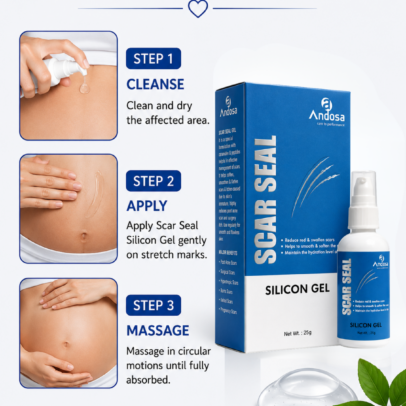
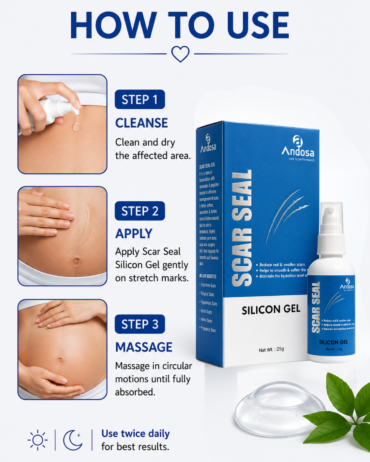
Step 1: Wait till it’s fully healed. No open wound, no weeping, no blisters, before you start.
Step 2: Clean the area gently. Mild soap and water, pat dry, don’t rub.
Step 3: Take a small amount. Pea to dime-sized, depending on how big the mark is.
Step 4: Rub it in for 2-3 minutes. Helps it absorb and gets a bit of circulation going in that spot.
Step 5: Let it dry. Goes invisible within 3-5 minutes. Avoid tight clothes rubbing over it right after.
Step 6: Do this twice a day. Morning and night, every day, for at least 8-12 weeks.
Step 7: Take weekly photos. Same lighting, same angle. Shows progress way better than checking the mirror daily, which often feels like nothing’s changing.
Case Study 1: Postpartum Belly, Three Months In
A first-time mom in Delhi started Scar Seal five weeks after delivery, once her doctor confirmed her C-section cut had healed. She used it twice a day across her belly, covering both the scar and the stretch marks nearby. By week six, the incision line had flattened noticeably. By month three, the darker marks near her belly button had lightened and softened, though older marks near her hips took a bit longer to show change.
Case Study 2: Kitchen Burn on the Forearm
A home cook in Pune got a second-degree burn from hot oil. Once the wound closed around three weeks in, she started applying Scar Seal twice daily. The raised, red scar started flattening by week five, with the redness fading to pink by week eight. By month four, it had blended well with the surrounding skin, with just a faint texture difference left if you looked closely.
Case Study 3: Old Stretch Marks From Eight Years Ago
A mother of two in Bangalore, dealing with silvery marks from a pregnancy eight years back, started using Scar Seal along with gentle weekly exfoliation. Color change was slow, but she noticed real texture softening within two months. By month five, the marks were less raised and much easier to hide, even without makeup or body cover-up.
Frequently Asked Questions
1. Is Scar Seal Silicon Gel safe during pregnancy? Silicone gel is generally considered safe for topical use during pregnancy, but check with your doctor first, especially early on or if your skin’s sensitive.
2. Can I use it while breastfeeding? Yes. Silicone-based gels are widely seen as fine with breastfeeding since they don’t get absorbed into the body like some active ingredients do.
3. How soon after a C-section can I start? Most doctors say wait till the cut is fully closed, usually two to three weeks after surgery, before starting.
4. Will it completely remove old stretch marks? Not completely, but it can soften texture and blend color noticeably, especially with months of consistent use.
5. How long before I see results on burn scars? Most people see texture change by week four to six, and clearer fading between weeks eight and twelve if used twice a day without skipping much.
6. Can I use it on an open burn wound? No. Only once the burn has fully healed and closed — no open skin, no weeping, no blisters.
7. Is itching normal during pregnancy stretch marks? Yes, that’s common as skin stretches. Keeping skin moisturized alongside gel use can help with the itch.
8. What’s different about treating fresh vs old marks? Fresh marks, under a year old, usually fade faster and more visibly than old, settled silvery marks, though both improve with steady use.
9. Do I need sunscreen while treating a scar or mark? Yes. Sun exposure can darken healing marks, so daily sun protection on the treated area helps the fading along.
10. How much do I need for a full course? Most people go through about two 30ml tubes over a standard 8-to-12-week course, depending on how big the area is.
11. Can men use this for burn scars too? Yes, it works the same way regardless of gender — fine for any burn or surgery scar once it’s healed.
12. What if I miss a few days? No big deal, just pick it back up. Sticking with it overall matters way more than never missing a single day.
