Difference Between Acne Marks and Acne Scars: Causes, Treatment, and Prevention
-
admin
- Posted on
Acne is one of the most common skin concerns across age groups. While the pimples themselves may heal quickly, many people notice persistent marks or scars. These post-acne changes can be confusing because people often mix up acne marks and acne scars. Knowing the difference is important, as each requires a different care approach to ensure healthy, smooth skin.
Understanding Acne Marks
Acne marks are flat discolorations that remain after a pimple heals. These marks result from increased melanin production in response to inflammation. Medically, they are known as Post-Inflammatory Hyperpigmentation (PIH). Unlike scars, acne marks do not affect the skin’s texture, making them easier to manage.
Identifying Acne Marks
Acne marks vary in color depending on your skin type and the severity of the inflammation:
- Red or pink marks appear soon after a pimple heals due to small blood vessels under the skin.
- Brown or dark spots occur when excess melanin accumulates.
- Purple marks – temporary, often seen in sensitive skin types.
Marks are usually flat and smooth, and they often fade naturally over weeks or months.
Caring for Acne Marks
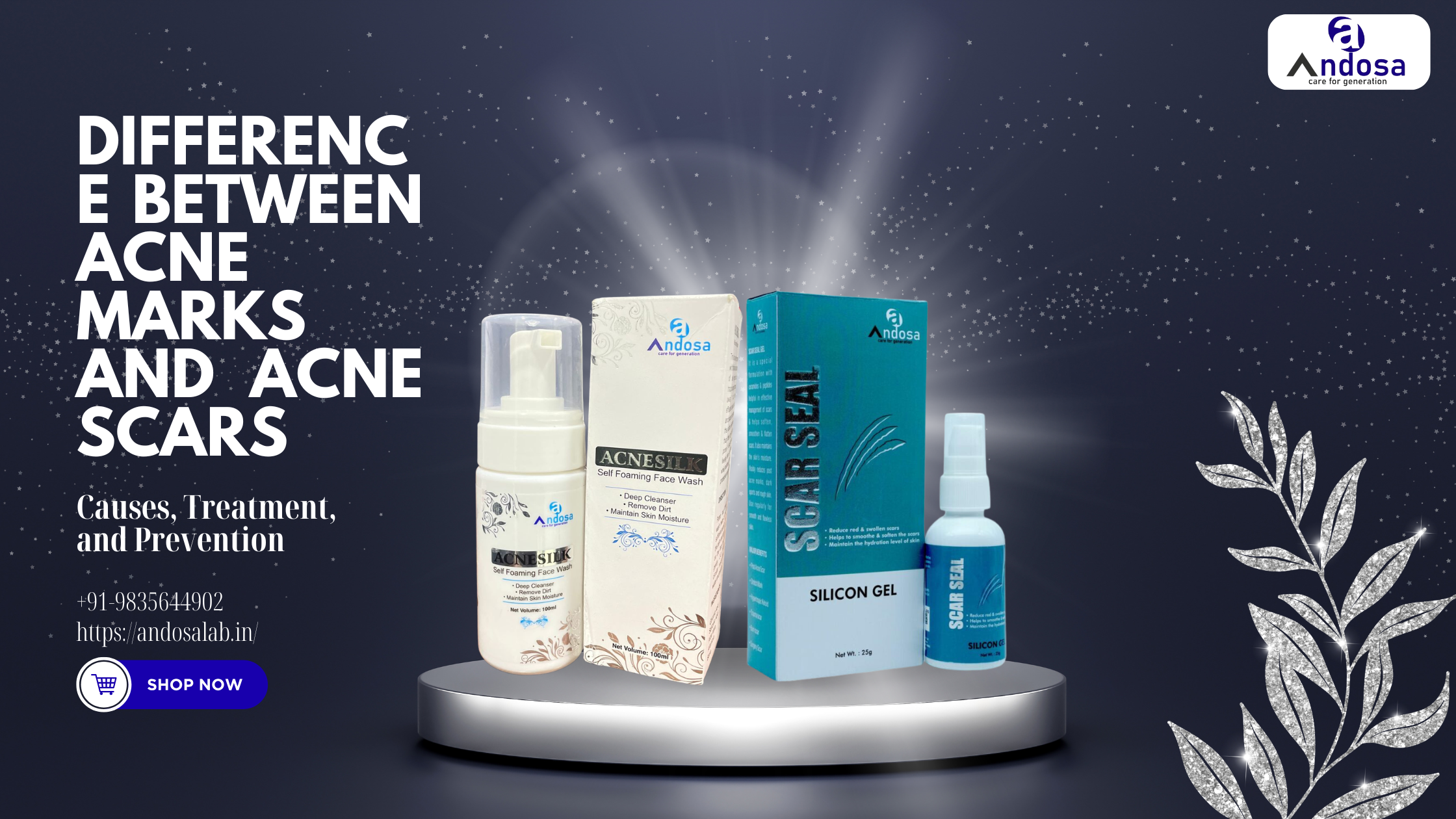
Cleansing is the first step in helping marks fade. Using a gentle foaming cleanser such as AcneSilk Self-Foaming Face Wash, which is formulated for acne-prone skin, can remove impurities without irritating the skin. A strong skin barrier also helps marks fade faster and prevents new pigmentation from forming. Our content on skin barrier repair explores routines and ingredients that support this natural healing process.
Sun protection is essential, as UV exposure can darken existing marks. Consistently following sun-safe habits, similar to strategies discussed in the ultimate guide to sun protection, accelerates fading and keeps your skin healthy.
Understanding Acne Scars
Acne scars are permanent changes to the skin’s structure, caused when deep inflammation damages collagen. Collagen is responsible for the skin’s firmness and smoothness, and when it is disrupted, scars form. Unlike marks, acne scars alter the texture of the skin, and their management requires targeted care.
Types of Acne Scars
- Depressed Scars (Atrophic) – small indentations often formed after severe acne.
- Raised Scars (Hypertrophic) – thickened areas due to excessive collagen formation.
- Rolling Scars – broad, sloping depressions that create a wavy skin texture.
Raised scars can gradually improve with silicone gels like Scar Seal Silicone Gel, which helps smooth the skin over time. For deeper or more pronounced scars, professional methods such as microneedling, chemical peels, or laser treatments can restore skin texture.
Key Differences Between Marks and Scars
Identifying acne marks versus scars is critical for choosing the right treatment:
- Acne Marks: Flat, smooth, and pigmented. They fade naturally over time.
- Acne Scars: Raised or indented areas. Permanent changes to skin texture require targeted care.
Marks respond well to pigment-focused care like brightening creams, while scars often need structural repair. For example, hypertrophic scar treatments focus on flattening raised scars, while atrophic scars benefit from collagen-stimulating routines.
Causes of Acne Marks
Acne marks develop when inflammation triggers extra melanin. Several factors increase the likelihood:
- Mild to moderate acne
- Picking or squeezing pimples
- Overuse of harsh scrubs or cleansers
- Sun exposure without protection
- Weak or compromised skin barrier
A weak skin barrier can make your skin more prone to pigmentation. Consistent use of barrier-supporting routines, as explained in our skin barrier repair guide, can significantly reduce the formation of marks.
Causes of Acne Scars
Acne scars result from deeper inflammation damaging the skin’s collagen. Common causes include:
- Cystic or nodular acne
- Aggressive picking or popping of pimples
- Delayed acne treatment
Scarring risk is higher when acne is untreated or severe. Gentle cleansing and products that reduce inflammation, such as those discussed in our best face wash for acne and dark spots guide, can lower the likelihood of permanent texture changes.
Treatment for Acne Marks
Since acne marks are primarily pigmentation issues, care focuses on brightening and protection:
- Gentle Cleansing: Products like AcneSilk Self-Foaming Face Wash help remove impurities without damaging the skin barrier.
- Brightening Ingredients: Niacinamide, Vitamin C, and Alpha Arbutin gradually reduce pigmentation.
- Sun Protection: Daily sunscreen prevents marks from darkening and speeds up fading. Methods outlined in the ultimate guide to sun protection provide practical tips for daily use.
Consistency is essential. Over-aggressive treatments or harsh scrubs can worsen inflammation and prolong pigmentation.
Treatment for Acne Scars
Scar care focuses on structural repair:
- Depressed Scars: Microneedling, chemical peels, and collagen-boosting routines help restore smoothness.
- Raised Scars: Silicone gels, like Scar Seal Silicone Gel, help flatten the skin over time.
Combining at-home care with professional approaches, discussed in complete scar removal strategies, provides the best results. Understanding the type of scar helps select the correct approach — for example, hypertrophic scar treatments are particularly effective for thickened, raised scars.
Prevention Strategies
Preventing marks and scars is easier than treating them:
- Avoid picking or squeezing pimples
- Treat acne early with gentle cleansing
- Use daily sun protection
- Maintain a consistent skincare routine
- Support the skin barrier with hydration and mild moisturizers
These strategies reduce inflammation, minimize pigmentation, and prevent permanent changes. Additional practical steps are available in our skin barrier repair and complete scar removal guides, which explain routines suitable for all skin types.
When to Consult a Dermatologist?
Seek professional care if:
- Acne is severe or cystic
- Scars appear rapidly
- Home care shows minimal improvement after a few months
Professional intervention ensures early correction of texture changes, complementing at-home routines. Our complete scar removal strategies explain when professional treatments are recommended and what to expect.
Frequently Asked Questions
1. What is the difference between acne marks and acne scars?
Marks are flat pigment spots that fade over time, while scars permanently alter the skin’s texture.
2. Do acne marks fade naturally?
Yes. Sun protection and barrier-supporting routines help marks fade over several weeks or months.
3. Are acne scars permanent?
Some scars can last a long time. Products like Scar Seal Silicone Gel and professional collagen-stimulating treatments help improve appearance.
4. Can acne marks turn into scars?
No, marks are pigment-related. However, untreated deep acne can lead to scarring.
5. How long does acne scar treatment take?
Mild scars may improve in a few months; deeper scars need consistent care and sometimes professional intervention.
6. Which products help prevent marks and scars?
Gentle cleansers like AcneSilk Self-Foaming Face Wash, silicone gels, and routines that support the skin barrier are most effective.
7. How can I strengthen my skin barrier?
Using mild cleansers, moisturizers, and barrier-supporting routines helps reduce inflammation and prevents pigmentation naturally.
8. What daily routine reduces both marks and scars?
Consistent cleansing, targeted brightening treatments, sunscreen, and scar-supporting products combined with hydration yield the best results.
Conclusion
Taking care of post-acne skin requires a combination of gentle cleansing, barrier support, sun protection, and targeted scar care. Using products like AcneSilk Self-Foaming Face Wash for daily cleansing and Scar Seal Silicone Gel for raised scars can make a visible difference over time.