The Definitive Guide to Daily Derma Care for South Indian Skin
-
admin
- Posted on
Healthy skin in South India (Tamil Nadu, Karnataka, Kerala, Andhra Pradesh, Telangana) requires a routine that addresses high UV exposure, extreme humidity, and mineral-rich hard water. The core dermatological recommendation is a pH-balanced CTM-P routine (Cleanse, Tone, Moisturize, Protect). Key ingredients for this region include Niacinamide for oil control, Hyaluronic Acid for weightless hydration, and SPF 50+ PA+++ to prevent hyperpigmentation common in tropical latitudes.
What is the Ideal Daily Derma Care Routine for the South Indian Climate?
The ideal daily derma care routine for South Indian skin is a science-backed, four-step process designed to maintain the skin barrier while managing tropical environmental stressors. Because the southern peninsula faces high UV indices and humidity year-round, your routine must prioritize breathable hydration and maximum photoprotection.
The CTM-P Framework for Tropical Skin:
- Cleanse: Use a soap-free, sulphate-free cleanser twice daily to remove sweat and pollutants without stripping natural lipids.
- Tone: Apply an alcohol-free toner with Rose Water or Niacinamide to soothe heat-induced inflammation and tighten pores.
- Moisturize: Use a gel-based or water-light moisturizer containing Ceramides to repair the barrier disrupted by hard water.
- Protect: Apply a broad-spectrum SPF 50+ sunscreen every morning and reapply every 3 hours if outdoors.
Understanding Environmental Impacts on South Indian Skin
To achieve Expertise in skincare, we must look at the data behind the environment. South India’s geography significantly dictates skin behavior.
1. The Humidity Factor (Coastal vs. Inland)
In coastal cities like Chennai, Kochi, and Vizag, the humidity often exceeds 70%. This prevents sweat from evaporating, leading to:
- Hyper-seborrhea: Excessive oil production.
- Acanthosis Nigricans: Darkening of skin folds due to friction and moisture.
- Fungal Acne (Malassezia Folliculitis): Tiny bumps caused by yeast overgrowth in moist conditions.
2. The Hard Water Crisis in Urban Hubs
Cities like Bengaluru and Hyderabad frequently use groundwater with high TDS (Total Dissolved Solids) levels. Minerals like Calcium and Magnesium react with sebum to form “soap scum,” which clogs pores and causes:
- Atopic Dermatitis: Eczema-like flare-ups.
- Chronic Dryness: Despite the heat, the skin feels “stretchy” and irritated.
3. The UV Index and Melanin Response
The southern states are closer to the equator. A UV index of 10+ is common. For Indian skin (Fitzpatrick types IV-VI), this leads to Post-Inflammatory Hyperpigmentation (PIH) and Melasma more rapidly than in cooler climates.
Essential Daily Derma Care Ingredients
| Ingredient | Biological Function | Why it’s Essential for South India |
| Salicylic Acid | BHA (Beta Hydroxy Acid) | Dissolves oil deep in pores; prevents monsoon breakouts. |
| Niacinamide | Vitamin B3 | Regulates sebum; minimizes pore appearance in heat. |
| Vitamin C | Antioxidant | Neutralizes free radicals from intense morning sun. |
| Ceramides | Lipid molecules | Rebuilds the skin barrier damaged by hard water. |
| Hyaluronic Acid | Humectant | Pulls moisture into the skin without a heavy/greasy feel. |
The Andosa Lab Daily Protocol (Morning & Evening)
Morning Routine: “The Shield”
Your morning routine is about defense. In South India, the sun is strongest between 10 AM and 4 PM.
- Step 1: Gentle Cleansing
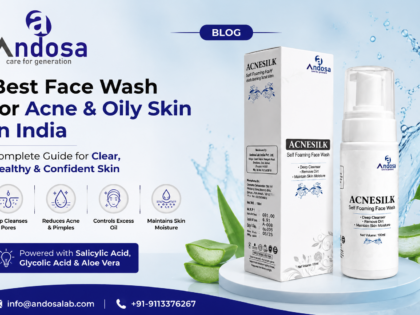
Use a pH-balanced wash like Andosa Lab’s Acnesilk. It uses Salicylic Acid to clear overnight sebum without the “squeaky clean” feeling that indicates a broken barrier. - Step 2: Antioxidant Loading
Apply a good face serum. This acts as a secondary line of defense under your sunscreen, preventing the “dulling” effect of pollution in traffic-heavy cities. - Step 3: Lightweight Hydration
Skip heavy oils. Use a gel-based hydrator. If you are in a dry-heat city like Hyderabad, look for products with Glycerin. - Step 4: Maximum SPF
Use a “Dry Touch” or Matte sunscreen. Apply it 20 minutes before leaving home.
Evening Routine: “The Repair”
Night-time is when cell turnover peaks. This is the only time to use “active” repair ingredients.
- Step 1: The Double Cleanse
Sunscreen is designed to stick to your skin. A single wash won’t remove it. Use a micellar water or oil-cleanser first, followed by your regular face wash. - Step 2: Targeted Treatment
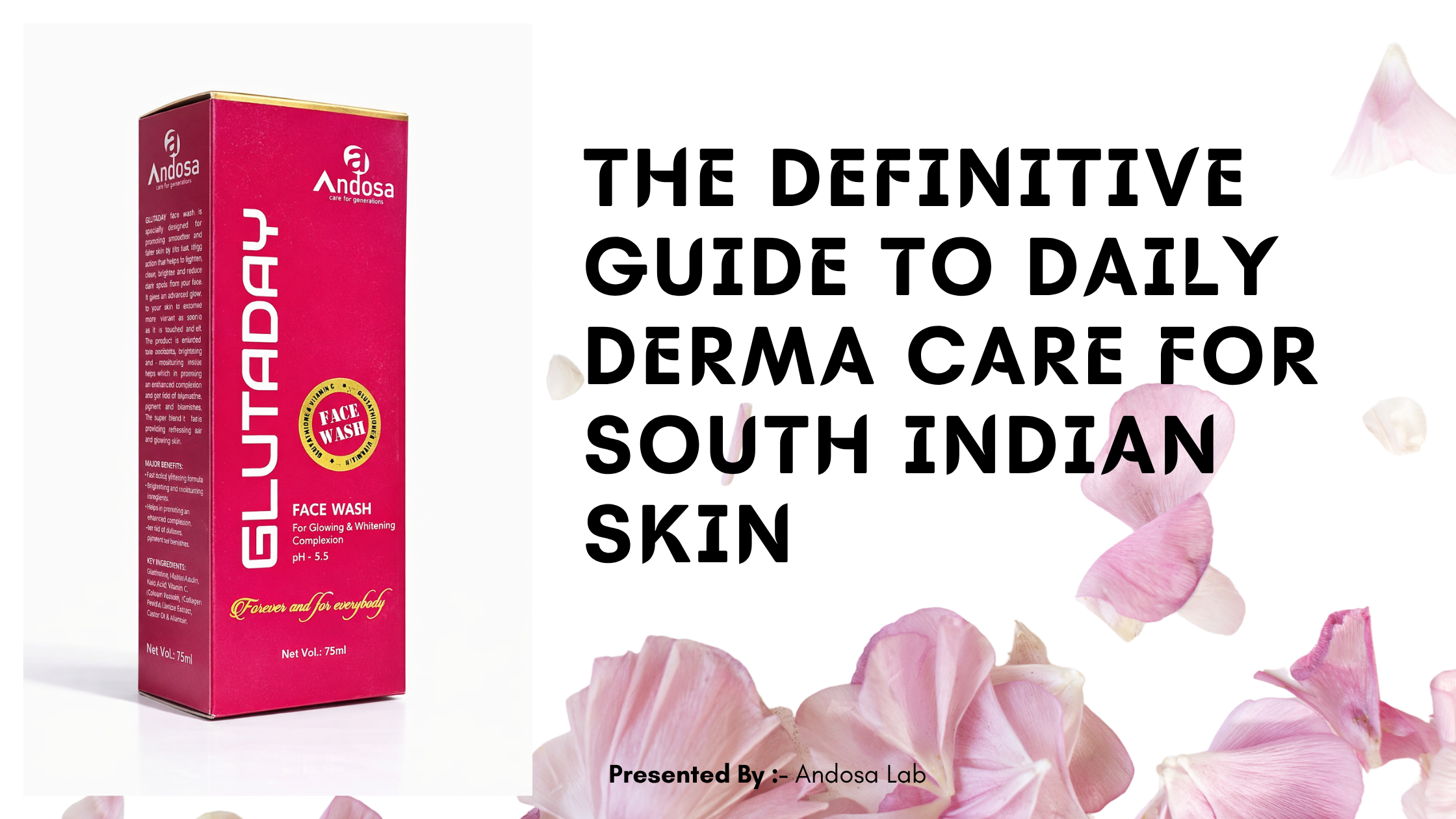
If you have dark spots from sun exposure, use Andosa Lab’s Glutaday, which focuses on safe brightening and evening out skin tone. - Step 3: Barrier Recovery
Use a slightly richer cream at night. Look for Ceramides or Peptides to help the skin recover from the day’s UV stress.
Regional Skincare Solutions for South Indian States
Karnataka & Telangana (Dealing with Dryness and Dust)
In the Deccan Plateau, the air can be surprisingly dry. Dust and particulate matter (PM2.5) are high in Bengaluru and Hyderabad.
- Pro-Tip: Use a “pollution-shield” moisturizer that creates a film to prevent dust from entering pores.
Tamil Nadu & Andhra Pradesh (Combatting Extreme Heat)
The “Agni Nakshatram” period brings extreme heat.
- Pro-Tip: Store your toners and gel masks in the refrigerator. The cold temperature helps constrict blood vessels and reduces heat-induced redness.
Kerala (Managing Monsoon Humidity)
The long monsoon season in Kerala creates a breeding ground for fungal infections.
- Pro-Tip: Incorporate antifungal cleansers or powders in body folds and ensure your face wash contains Tea Tree or Neem extracts to keep microbes at bay.
Frequently Asked Questions
1. Why does my skin look darker in the evening?
This is often due to oxidation. When skin oils mix with pollution and UV rays, they oxidize, making the complexion look dull. Using an antioxidant serum (Vitamin C) in the morning and double-cleansing at night prevents this.
2. Can I use the same products in Chennai and Bengaluru?
Not necessarily. Chennai’s humidity requires gel textures, while Bengaluru’s harder water and drier air might require more lipid-rich (creamy) products to prevent the skin barrier from cracking.
3. What is the “Two-Finger Rule” for sunscreen?
To get the SPF rating on the bottle, you must apply enough product. Two strips of sunscreen on your index and middle fingers should cover your face and neck entirely.
4. How do I remove tan safely without bleaching?
Avoid harsh bleaches. Use Andosa Lab’s products with Kojic Acid, Liquorice, or AHAs. These gently exfoliate the tanned top layer over 4–6 weeks, revealing your natural skin tone safely.
5. Does hard water cause acne?
Indirectly, yes. Hard water leaves a film on the skin that can trap bacteria and oil. It also alters the skin’s pH, making it easier for acne-causing bacteria (P. acnes) to thrive.
Final Expert Summary
Dermatological care in South India is defined by photoprotection and moisture regulation. By utilizing Andosa Lab’s pharmaceutical-grade formulations—designed specifically for Indian skin types—users can combat the triple threat of humidity, UV radiation, and hard water. A consistent CTM-P routine with targeted actives like Niacinamide and Salicylic Acid remains the gold standard for daily derma care.
For personalized product recommendations and clinical-grade skincare, explore the full range at Andosa Lab.