Scar Seal Silicon Gel vs Other Scar Removers: Complete Comparison Guide — Which Works Best?
-
admin
- Posted on
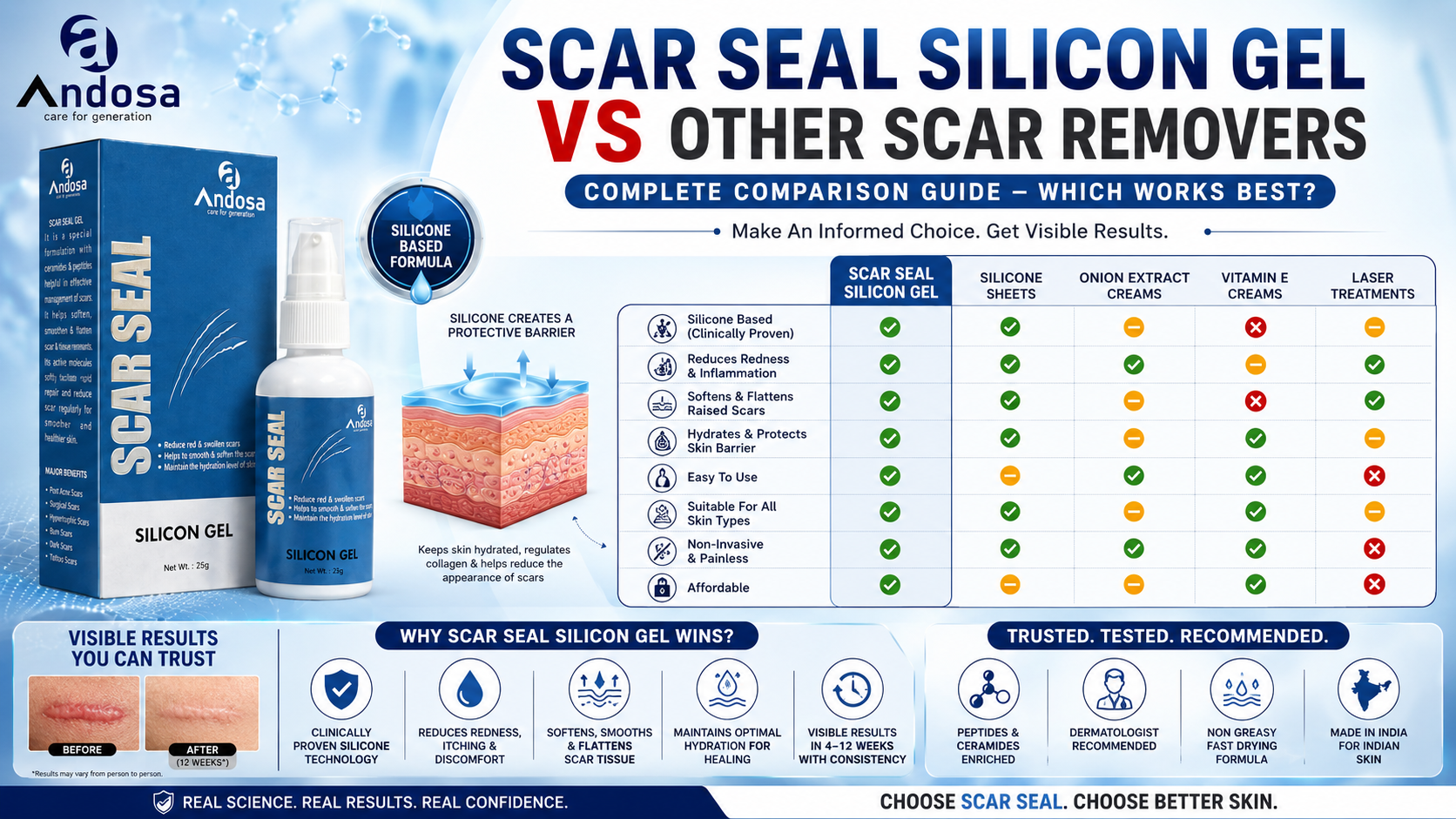
Your scar has been there for months. Maybe years. And every time you look in the mirror or catch someone staring, you feel that familiar knot in your chest. You’ve probably tried things. A cream here, a patch there. Nothing stuck. Now you’re scrolling through scar removal options, and there’s a wall of choices — silicone gels, sheets, creams, expensive treatments you can’t afford. And somewhere in that noise, you wonder: Which one actually works?
Here’s the truth: Not all scar removers are created equal. But there’s one that stands above the rest for most people — and it’s been trusted for over 30 years. This guide will show you why.
What Actually Makes a Scar Remover Work?
Before comparing products, you need to understand what you’re actually treating.
A scar isn’t a stain you can wash off. It’s your skin’s attempt to heal after injury — surgery, acne, burns, accidents. Your body floods the area with collagen (a tough protein), which knits the wound closed. The problem? It overdoes it. Too much collagen = raised, thick, discolored scar tissue.
So what does a scar remover actually do?
It doesn’t erase the scar. Let’s be clear on that first. The goal is to soften the texture, flatten the raised parts, reduce redness or discoloration, and make the scar blend in with surrounding skin. That’s the realistic win.
The most effective way to do this? Occlusion — creating a protective barrier over the scar that:
- Hydrates the tissue
- Regulates collagen production
- Protects from sun exposure and dirt
- Reduces itching and discomfort
Now here’s what the research says: Silicone is the gold standard. Every dermatology journal, every plastic surgeon, every scar clinic points to the same ingredient — silicone. Over 30 years of clinical evidence backs it.
But within silicone, there are choices. And they matter.
Discover Scar Seal: The Silicone Solution That Works →
The Main Categories of Scar Removers
Let me break down what’s actually available:
1. Silicone Gels (The Clear Winner for Daily Use)
These are topical gels you apply directly to the scar, usually twice daily. They dry clear and invisible.
How it works: The silicone forms a semi-occlusive barrier, keeping the scar hydrated while regulating collagen. Easy to apply, easy to forget you’re wearing it.
Best for: Facial scars, acne scars, irregularly shaped scars, people who want invisibility during work or social situations.
Effectiveness: Clinically proven across 30+ years of use. A major study in Dermatologic Surgery compared silicone gel to other treatments and found it beat everything else for improving color, thickness, and overall appearance — especially on face and hand scars.
Cons: Requires consistency (twice daily for 8-12 weeks minimum). Some people find it slightly greasy if not dried fully.
Cost: ₹400–₹1,500 depending on brand and size.
2. Silicone Sheets (Maximum Pressure, Maximum Commitment)
These are adhesive patches you stick on the scar. You wear them throughout the day, remove at night, clean them, reuse for weeks.
How it works: Sustained pressure + occlusion. The constant pressure helps flatten raised scars and prevent keloids. Sheets deliver more pressure than gels.
Best for: Raised scars (hypertrophic scars), people at high risk for keloids, surgical sites on the chest or abdomen, people who want a “set it and forget it” solution.
Effectiveness: Very high for keloid prevention. A study in Plastic Surgery International found sheets significantly improved scar height, blood vessel appearance, and tissue flexibility — sometimes better than gels.
Cons: Visible under thin clothing. Can irritate sensitive skin. Not ideal for high-movement areas (elbows, joints). Requires daily cleaning and maintenance.
Cost: ₹800–₹2,500 for a month’s supply.
3. Onion Extract Creams (Natural, But Weaker)
Brands like Mederma and similar use onion extract (allicin) + silicone + other botanicals.
How it works: Onion extract has mild anti-inflammatory properties. Silicone provides the main effect. The rest is marketing.
Best for: People with sensitive skin who want a “natural” option. Very mild scars that need minimal treatment.
Effectiveness: Moderate. The silicone does 80% of the work; onion extract adds 15%. The rest is hope.
Cons: Usually lower silicone concentration than dedicated gels. More expensive for less active ingredient. Odor (onion).
Cost: ₹600–₹1,200.
4. Vitamin E & Moisturizers (Popular But Overhyped)
Vaseline, vitamin E oils, generic moisturizers marketed as “scar creams.”
How it works: Moisturization + mild protection. That’s it.
Best for: Very early-stage wound healing (first 2 weeks after injury). Not for established scars.
Effectiveness: Low for actual scars. Fine for prevention if used immediately after injury.
Cons: Zero clinical evidence for reducing scar appearance. You’re basically using expensive moisturizer.
Cost: ₹100–₹500.
5. Professional Treatments (When Topicals Aren’t Enough)
Laser therapy, microneedling, steroid injections, cryotherapy — these require a dermatologist or plastic surgeon.
How it works: Varies by treatment. Lasers resurface skin. Microneedling triggers collagen remodeling. Injections flatten from inside.
Best for: Deep scars, old scars (5+ years) that didn’t respond to topicals, severe keloids.
Effectiveness: Very high, but results vary. Laser works best on red/purple scars. Microneedling works on depressed scars. Injections work on raised scars.
Cons: Expensive (₹3,000–₹15,000 per session, multiple sessions needed). Downtime. Risk of complications.
Cost: ₹20,000–₹100,000+ for a full treatment course.
Try Scar Seal First: Effective, Affordable, Proven →
The Direct Comparison: Silicone Gels Face-Off
Since silicone gel is the clear winner for at-home treatment, let’s compare the actual brands and types available:
| Product | Type | Key Advantage | Best For | Cost Range | Drying Time |
|---|---|---|---|---|---|
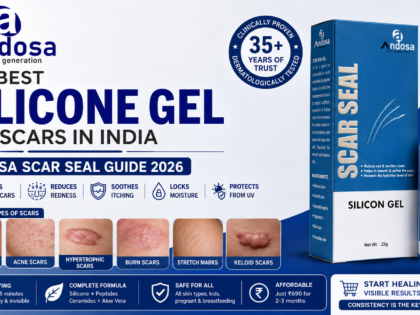
| Scar Seal (Andosa Lab) | Medical-grade silicone gel | High purity, fast-drying, Indian-made, affordable | All scar types, budget-conscious buyers | ₹690 | 3-5 mins |
| Mederma Advanced | Silicone + onion extract | Brand recognition, available everywhere | Mild scars, people who like onion extract | ₹800–₹1,000 | 5-10 mins |
| ScarEnd (Mankind) | Silicone + ceramides + peptides | Added moisturizers, smoother feel | Sensitive skin, added nourishment | ₹558–₹700 | 5-10 mins |
| NewGel+E | Medical-grade silicone + vitamin E | International brand, premium positioning | People wanting “premium” gel | ₹5,500 (imported) | 3-5 mins |
| Silicone Sheets (Generic) | Adhesive silicone patches | Reusable, sustained pressure | Raised/keloid scars, commitment | ₹1,200–₹2,500/month | N/A |
| Bio-Oil | Oil-based moisturizer | Popular, pleasant fragrance | Stretch marks, not scars | ₹400–₹600 | Doesn’t dry |
The Reality: Most silicone gels work similarly. The active ingredient (medical-grade silicone) is the same. The differences are:
- Brand reputation (Mederma charges more for the name)
- Additional ingredients (ceramides, peptides, vitamin E — nice but not essential)
- Drying time (matters if you’re applying under makeup)
- Price (Scar Seal offers the best value)
Here’s what the research actually shows:
A comprehensive review in the Cochrane Database analyzed 20 randomized clinical trials comparing different silicone products. The finding? All medical-grade silicone gels performed equally well. Success had more to do with consistency of use than the specific brand.
That means: The best scar gel is the one you’ll actually use twice daily for 12 weeks. If that’s an expensive import, great. If that’s an affordable Indian brand like Scar Seal, equally great.
Why Scar Seal Stands Out (For Indian Users)
Andosa Lab’s Scar Seal is formulated specifically for Indian skin and Indian climate. Here’s why that matters:
1. Perfect Drying Time for Hot, Humid Weather Indian summers are brutal. You need a gel that dries fast without staying sticky. Scar Seal dries in 3-5 minutes — fast enough to use before work, before applying makeup, before going out. Not so fast that it cracks or peels.
2. Formulated for Indian Skin Pigmentation Imported gels are tested on Caucasian skin (lighter). Indian skin tones (deeper melanin) respond differently to silicone and show discoloration differently. Scar Seal is created with Indian users in mind — it accounts for how our skin heals and what scars actually look like on us.
3. Affordability Without Compromising Quality A 30ml tube of imported gel can cost ₹5,500+. Scar Seal is ₹690. Same medical-grade silicone, same efficacy, radically different price point. That difference means people actually finish the 12-week course instead of stopping early because it’s too expensive.
4. No Sticky Residue (The Indian Problem) Many silicone gels from international brands leave a sticky residue in humid climates. Dust sticks to it, making the scar area look worse. Scar Seal’s formulation minimizes this.
5. Made by Andosa Lab (Dermatologist-Backed) Not some faceless supplier. Andosa Lab is a USDA-certified organic company with a team of dermatologists overseeing formulation. You’re not guessing if it’s legit.
Order Scar Seal Silicon Gel: Tested, Proven, Affordable →
How to Actually Use Scar Removers (The Part Nobody Gets Right)
Here’s where most people fail: They don’t use it correctly.
For Silicone Gels (Like Scar Seal):
- Clean the scar — Wash gently with soap and water. Pat dry (don’t rub).
- Apply thin layer — Dime-sized amount for a 1-inch scar. Don’t overdo it (wastes product, stays sticky).
- Wait for drying — 3-5 minutes. Don’t touch it. Don’t apply makeup over wet gel.
- Consistency is everything — Twice daily, every day, for 8-12 weeks minimum. Missing days resets your progress.
- Be patient — Most scars start showing improvement at 4-6 weeks. Full results take 12+ weeks.
For Silicone Sheets:
- Clean and dry thoroughly — Any moisture prevents adhesion.
- Apply directly over scar — Press firmly for 30 seconds.
- Wear 12+ hours daily — Ideally overnight + during the day.
- Clean the sheet daily — Wash with soap and water, air-dry before reapplying.
- Change when adhesive weakens — Usually every 5-7 days.
Common Mistakes That Kill Results:
❌ Applying over wet skin — Silicone won’t adhere properly.
❌ Skipping days — One week missed = you’ve reset a month of progress.
❌ Applying thick layers — More isn’t better. Thin, even coverage works best.
❌ Quitting after 4 weeks — Scars need time. Eight weeks is minimum. Old scars need 3-6 months.
❌ Using sheet + gel together — They compete. Choose one format.
❌ Ignoring sun protection — UV exposure darkens old scars. If treating a scar, use SPF 30+ always.
Timeline: When You’ll See Results
Week 1-2: Nothing visible. The gel is working (hydrating), but your scar looks the same.
Week 3-4: You might notice the scar feels softer. The texture is getting smoother.
Week 6-8: Redness starts fading. Raised parts are flattening. You’ll start seeing actual improvement.
Week 12: Noticeable reduction in appearance. If you had a red, raised surgical scar, it’s now pink and flatter. If you had acne marks, they’re less obvious.
Month 4-6: Full results. The scar is significantly less noticeable. Some scars (especially old ones) need this long.
Important: These timelines are for consistent, twice-daily use. Skipping days extends everything.
Real Question: Should You Use Topical Gel or See a Professional?
Use topical gel if:
- Your scar is mild to moderate
- You can commit to 12+ weeks of consistent use
- You’re on a budget
- You don’t have downtime for procedures
- Your scar is on your face or joints (gels are better for these)
See a professional if:
- Your scar is severe or keloid (raised, keeps growing)
- Your scar is 5+ years old and hasn’t improved with topicals
- You have a large surgical scar that responds poorly to gels
- You want faster results (willing to pay for it)
- Your scar is causing physical discomfort (tight, itchy, restricting movement)
The honest truth? Most scars respond well to silicone gel if used correctly. You don’t need an expensive professional treatment unless you’re dealing with a serious case.
Start with Scar Seal: Affordable, Effective, Proven →
Scar Types & Which Remover Works Best
Not all scars are the same. Here’s how to identify yours — and what will actually help:
Atrophic Scars (Depressed/Pitted)
What they look like: Acne scars, chickenpox scars. Indented, like small pits in the skin.
Why they happen: Loss of tissue, not too much. Your skin has a hole.
Topical gel: Limited help. Silicone can’t fill in the depression.
Best treatment: Microneedling (professional), dermal fillers, or laser resurfacing.
Gel’s role: Use it afterward to prevent new scars and support healing.
Hypertrophic Scars (Raised, Thick)
What they look like: Red, puffy, raised above skin level. Common after surgery or burns.
Why they happen: Too much collagen buildup.
Topical gel: Very helpful. Silicone flattens and softens.
Better: Silicone sheets. The sustained pressure is specifically designed for raised scars.
Timeline: 8-12 weeks with gel. Results are visible by week 6.
Keloid Scars (Aggressive Raised)
What they look like: Like hypertrophic scars, but worse — they grow beyond the original wound. Hard, dark, keep expanding.
Why they happen: Genetic predisposition + inflammation. Your body doesn’t know when to stop healing.
Topical gel: Minimal help alone. Keloids are too aggressive for topical treatment.
Best treatment: Silicone sheets (maximum pressure) + steroid injections + professional help. This is not a DIY case.
Warning: Starting treatment early (right after the injury) is crucial. Preventing a keloid is much easier than shrinking one.
Contracture Scars (Tight, Movement-Limiting)
What they look like: Tight bands of scar tissue that restrict movement. Usually from deep burns.
Why they happen: Severe tissue loss + uneven healing.
Topical gel: Doesn’t help much. The scar is too deep and integrated.
Best treatment: Surgical release + skin grafts. Professional intervention required.
Atrophic Scars with Discoloration (Post-Acne)
What they look like: Combination — some pitted spots + general redness/hyperpigmentation.
Why they happen: Acne inflammation + tissue loss.
Topical gel: Helps with redness and discoloration. Doesn’t fill the pits.
Best treatment combo: Silicone gel for discoloration + microneedling or laser for texture.
Gel’s role: Use 24/7 to prevent new scars and support healing from procedures.
Get Scar Seal for Raised & Discolored Scars →
The Myths People Believe (And Why They’re Wrong)
Myth #1: “More expensive gel = better results”
False. A ₹5,500 imported gel works identically to a ₹690 Indian gel if both contain medical-grade silicone. The difference is brand markup, packaging, and import costs. The active ingredient is the same.
Myth #2: “Vitamin E is essential for scars”
False. Vitamin E is fine for skin health, but it doesn’t specifically treat scars. Silicone is what works. Vitamin E added to silicone is nice, but not necessary.
Myth #3: “Natural ingredients work better”
False. Onion extract, honey, oils — they’re fine for moisturization, but they don’t reduce scars like silicone does. Decades of research point to silicone. Natural doesn’t mean more effective.
Myth #4: “Results happen in 2 weeks”
False. Scars take time. 8-12 weeks minimum. If someone promises faster results, they’re selling you hope, not science.
Myth #5: “Scar removers work equally well on old scars”
Partially false. Old scars (5+ years) respond slower than new scars (under 1 year). Older scars may need professional treatment + topical support, not just topicals alone.
Myth #6: “You can use multiple gels at once”
False. Using two gels simultaneously doesn’t double results — it wastes product and confuses your skin. Pick one and stick with it.
Cost Comparison: What You’re Actually Paying For
Let’s break down a 12-week treatment course:
| Product | Cost Per Tube | Tubes Needed (12 weeks) | Total Cost | Cost Per Week |
|---|---|---|---|---|
| Scar Seal (30ml) | ₹690 | 2 tubes | ₹1,380 | ₹115 |
| Mederma Advanced (50g) | ₹900 | 2 tubes | ₹1,800 | ₹150 |
| ScarEnd (15g) | ₹560 | 4 tubes | ₹2,240 | ₹187 |
| NewGel+E (15g, imported) | ₹5,536 | 4 tubes | ₹22,144 | ₹1,845 |
| Silicone Sheets (monthly) | ₹1,800 | 3 months | ₹5,400 | ₹450 |
| Microneedling (professional) | ₹4,000-₹6,000/session | 3-4 sessions | ₹12,000–₹24,000 | ₹1,000–₹2,000 |
The reality: Scar Seal offers the best value without sacrificing quality. You’re paying for the silicone, not the packaging or imported markup.
For most people, ₹1,380 for a 12-week course is reasonable. Compare that to professional treatments (₹12,000+) and you’re saving money while getting clinically proven results.
Get Scar Seal: Best Value, Best Results →
How to Choose: Your Decision Tree
Step 1: What type of scar do you have?
- Raised/thick → Silicone sheets might work better, but gel is fine
- Pitted/indented → Gel helps with discoloration; professional treatment for texture
- Red/purple → Gel works great; UV protection is critical
- Old (5+ years) → Gel + professional treatment combo recommended
- Small/mild → Gel is perfect
Step 2: What’s your lifestyle?
- Busy/forgetful → Silicone sheets (wear and forget)
- Want invisibility → Silicone gel (clear, dries fast)
- Budget-conscious → Scar Seal gel (affordable, effective)
- Want premium feel → Mederma or imported options
- Willing to invest → Professional microneedling + topical support
Step 3: How much time can you commit?
- 12+ weeks, twice daily → Any silicone gel (best value)
- Want faster results → Professional treatment required
- Can do basic care only → Realistic expectations needed (slower improvement)
Step 4: What’s your budget?
- Under ₹2,000 → Scar Seal or ScarEnd gel
- ₹2,000–₹6,000 → Mederma or silicone sheets
- ₹6,000+ → Professional treatment (microneedling, laser)
The Bottom Line: What Actually Works
Here’s what 30+ years of dermatology research confirms:
Silicone is king. Every other option is secondary.
Consistency matters more than the specific brand. The gel you’ll actually use twice daily for 12 weeks beats the expensive gel you use sporadically.
Realistic expectations change everything. Scars don’t disappear. They fade, flatten, and blend in. If you’re expecting complete erasure, nothing will satisfy you.
Early intervention is crucial. Starting treatment within 3 months of injury gets you 3x better results than waiting a year.
Scar Seal is your best choice if:
- You want medical-grade silicone
- You’re budget-conscious
- You want a product formulated for Indian skin
- You want proven results backed by Andosa Lab’s dermatology team
- You want to start treatment immediately without expensive doctor visits
Start Your Scar Removal Journey with Scar Seal →