How to Remove Acne Marks and Dark Spots Naturally: Complete Dermatologist Guide for Clear, Even-Toned & Glowing Skin (2026)
-
admin
- Posted on
Acne may disappear in a few days, but the marks it leaves behind can stay for weeks, months, or even years. For millions of Indians, acne marks and dark spots are often more frustrating than the pimples themselves. You finally get rid of the breakout, only to see brown patches, red marks, uneven skin tone, and stubborn pigmentation staring back at you in the mirror.
This is one of the biggest reasons why searches such as “how to remove acne marks naturally,” “dark spots after pimples,” “best serum for acne marks,” and “how to get clear skin naturally” continue to grow every year.
Unfortunately, most people receive the wrong advice. Social media is filled with quick-fix solutions that promise overnight results. Lemon juice, toothpaste, baking soda, and harsh scrubs are often promoted as miracle remedies. In reality, many of these methods can worsen pigmentation, damage the skin barrier, and make acne marks even more noticeable.
Modern dermatology takes a completely different approach. Today, experts understand that acne marks are not simply a surface problem. They are a result of inflammation, melanin production, skin healing, UV exposure, and overall skin health.
At Andosa Lab, skincare is built around this modern understanding. Rather than focusing on aggressive treatments, the goal is to support healthy skin through balanced cleansing, hydration, skin barrier protection, and ingredient-focused formulations designed for Indian skin concerns.
In this guide, you will learn:
- Why acne marks develop
- Why is Indian skin more prone to pigmentation
- The difference between acne marks and scars
- Ingredients dermatologists recommend
- Natural methods that actually help
- Common mistakes that slow healing
- The ideal skincare routine
- How Andosa Lab products fit into a complete routine
Why Acne Marks and Dark Spots Are More Common in Indian Skin
Indian skin is naturally rich in melanin. Melanin protects against UV damage, but it also makes the skin more likely to develop post-inflammatory hyperpigmentation (PIH). This means that even a small pimple can leave behind a visible dark mark after it heals.
Several factors make acne marks particularly common in India:
Intense Sun Exposure
India receives strong sunlight throughout the year. UV rays stimulate melanin production and make existing dark spots darker.
Pollution
Dust, smoke, and environmental pollutants increase inflammation and oxidative stress, making the skin more vulnerable to pigmentation.
Humidity and Excess Oil
High humidity levels encourage excess sebum production, increasing the risk of clogged pores and acne.
Delayed Treatment
Many people ignore early acne breakouts until inflammation becomes severe, increasing the chance of long-term marks.
Aggressive Home Remedies
Harsh DIY remedies often irritate the skin and worsen pigmentation instead of improving it.
Acne Marks vs Acne Scars: Understanding the Difference
One of the biggest misconceptions is that acne marks and acne scars are the same thing.
| Acne Marks | Acne Scars |
|---|---|
| Flat discoloration | Textural damage |
| Brown, red, or purple marks | Indentations or raised scars |
| Usually temporary | Often permanent without treatment |
| Caused by excess melanin | Caused by collagen damage |
| Easier to improve | Harder to improve |
Most people searching for acne scar treatments actually have acne marks, which respond much better to skincare.
What Causes Acne Marks?
1. Inflammation
Every pimple creates inflammation. During the healing process, the skin produces extra melanin, resulting in dark spots.
2. Picking Pimples
Picking or squeezing pimples increases inflammation and damages surrounding tissue. This dramatically increases the risk of pigmentation.
3. Sun Exposure
UV rays stimulate melanin production and can make acne marks darker and more persistent.
4. Hormonal Acne
Hormonal breakouts often occur deeper within the skin, increasing the likelihood of pigmentation after healing.
5. Delayed Healing
When skin remains inflamed for longer periods, pigmentation becomes more severe.
Why Most Home Remedies Fail
Many home remedies become popular because they seem simple and inexpensive. However, effectiveness and safety are very different things.
Lemon Juice
Can irritate the skin and increase sensitivity.
Toothpaste
Contains ingredients not designed for facial skin and may worsen inflammation.
Baking Soda
Disrupts the skin’s natural pH and damages the barrier.
Over-Scrubbing
Creates micro-irritation and increases pigmentation.
The goal should not be to attack the skin aggressively. The goal should be to support healthy healing.
10 Dermatologist-Recommended Ingredients for Acne Marks
Niacinamide
Helps reduce pigmentation, strengthen the barrier, and control excess oil.
Vitamin C
Supports brighter skin and helps improve uneven tone.
Kojic Acid
Widely used to target pigmentation and dark spots.
Alpha Arbutin
Helps reduce melanin production and improve skin clarity.
Azelaic Acid
Supports acne control and pigmentation reduction.
Retinol
Encourages skin renewal and improves texture.
Salicylic Acid
Helps prevent future breakouts by keeping pores clear.
Glycolic Acid
Supports exfoliation and cell turnover.
Hyaluronic Acid
Maintains hydration and supports healing.
Ceramides
Help repair and strengthen the skin barrier.
The Best Daily Routine for Acne Marks and Dark Spots
Morning Routine
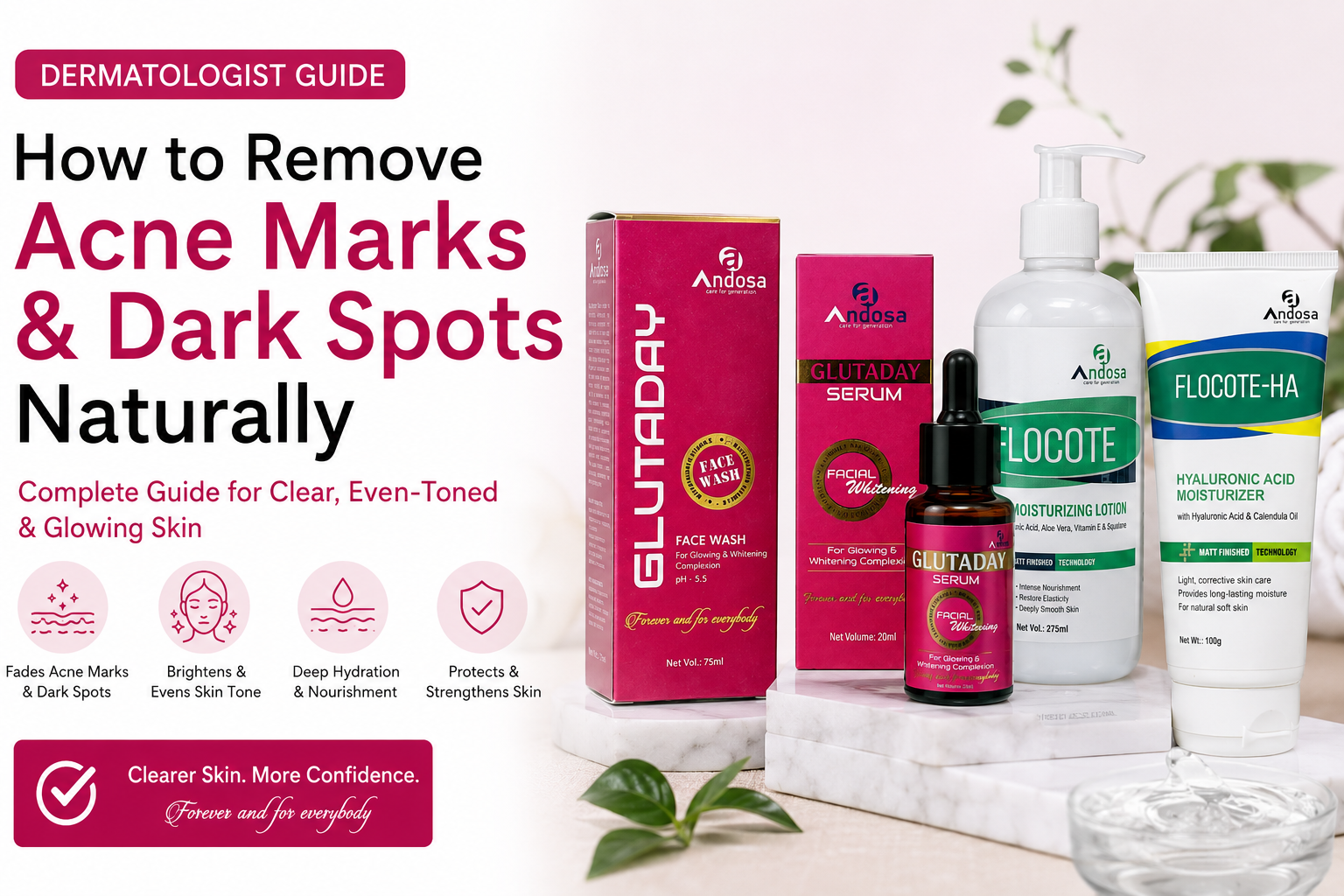
Step 1: Glutaday Face Wash
Removes oil, dirt, and impurities while supporting a fresher complexion.
Step 2: Glutaday Serum
Supports brighter, more even-looking skin and complements pigmentation-focused skincare.
Step 3: Flocote HA Moisturizer
Helps maintain hydration and supports the skin barrier.
Step 4: SPF 50+ Sunscreen
The single most important step for preventing dark spots from worsening.
Night Routine
Step 1: Glutaday Face Wash
Cleanses away pollution, sweat, and oil.
Step 2: Glutaday Serum
Supports overnight skin renewal.
Step 3: Flocote HA Moisturizer
Helps keep skin hydrated and comfortable.
How Long Does It Take to Fade Acne Marks?
| Concern | Timeline |
|---|---|
| Fresh marks | 4–8 weeks |
| Mild pigmentation | 2–3 months |
| Moderate pigmentation | 3–6 months |
| Deep pigmentation | 6+ months |
| Acne scars | May require professional treatment |
Consistency is more important than intensity.
15 Mistakes That Make Acne Marks Worse
- Picking pimples
- Skipping sunscreen
- Over-exfoliating
- Using harsh scrubs
- Not moisturizing
- Constantly changing products
- Sleeping with makeup
- Touching the face frequently
- Using expired products
- Ignoring active acne
- Excessive cleansing
- Using strong DIY remedies
- Not drinking enough water
- Poor sleep habits
- Stress-related neglect of skincare
Why Sunscreen Is the Most Important Product for Dark Spots
No pigmentation routine is complete without sunscreen.
Even the best serum cannot perform effectively if the skin is continuously exposed to UV rays.
Benefits of daily SPF 50+ use:
- Prevents dark spots from becoming darker
- Protects healing skin
- Supports an even skin tone
- Reduces future pigmentation risk
- Helps maintain skincare results
Why Andosa Lab Supports a Smarter Skincare Routine
Andosa Lab focuses on skincare solutions designed for Indian skin concerns.
Glutaday Face Wash
Supports gentle cleansing and a fresher-looking complexion.
Glutaday Serum
Complements routines focused on brighter and more even-looking skin.
Flocote HA Moisturizer
Supports hydration and barrier health.
Together, these products help create a balanced skincare routine without relying on harsh approaches.
Final Verdict
Removing acne marks and dark spots naturally is possible, but it requires patience, consistency, and the right skincare habits.
The most successful routines focus on:
- reducing inflammation
- supporting the skin barrier
- maintaining hydration
- using scientifically supported ingredients
- protecting the skin from UV damage
For Indian skin, long-term success comes from balanced skincare rather than aggressive treatments.
With proper cleansing, hydration, sun protection, and a consistent routine that includes products such as Glutaday Face Wash, Glutaday Serum, and Flocote HA Moisturizer, clearer, smoother, and more even-toned skin becomes an achievable goal.